
The Presidential Precedent: Why the Best Leaders Start as Surveyors
From Washington’s chain to the digital twin: why accurate boundaries remain the bedrock of civilization.

One of the original survey markers for Washington D.C.
The History: Three of the four faces on Mount Rushmore (Washington, Jefferson, Lincoln) began their careers as land surveyors, and the fourth nearly lost his life mapping a South American river.
The Lesson: They understood that before you can govern a nation, or build an economy, you must first define the ground it stands on.
The Modern Application: Today's infrastructure leaders aren't just measuring dirt; they are establishing the "Truth of the Land" for the next century.
The First Step of Nation Building
George Washington did not start his career as a general or a politician. At age 17, he was a surveyor for Culpeper County, Virginia. Thomas Jefferson and Abraham Lincoln followed similar paths.
Why is this relevant to the modern CEO of an engineering firm or a municipal Director of Public Works?
Because these leaders understood a fundamental economic truth: Without clear boundaries, there is no property. Without property, there is no investment.
Washington used a compass and a Gunter’s chain to bring order to the wilderness. He wasn't just drawing lines; he was creating the confidence required for settlers to build homes, plant crops, and eventually, build a global superpower.
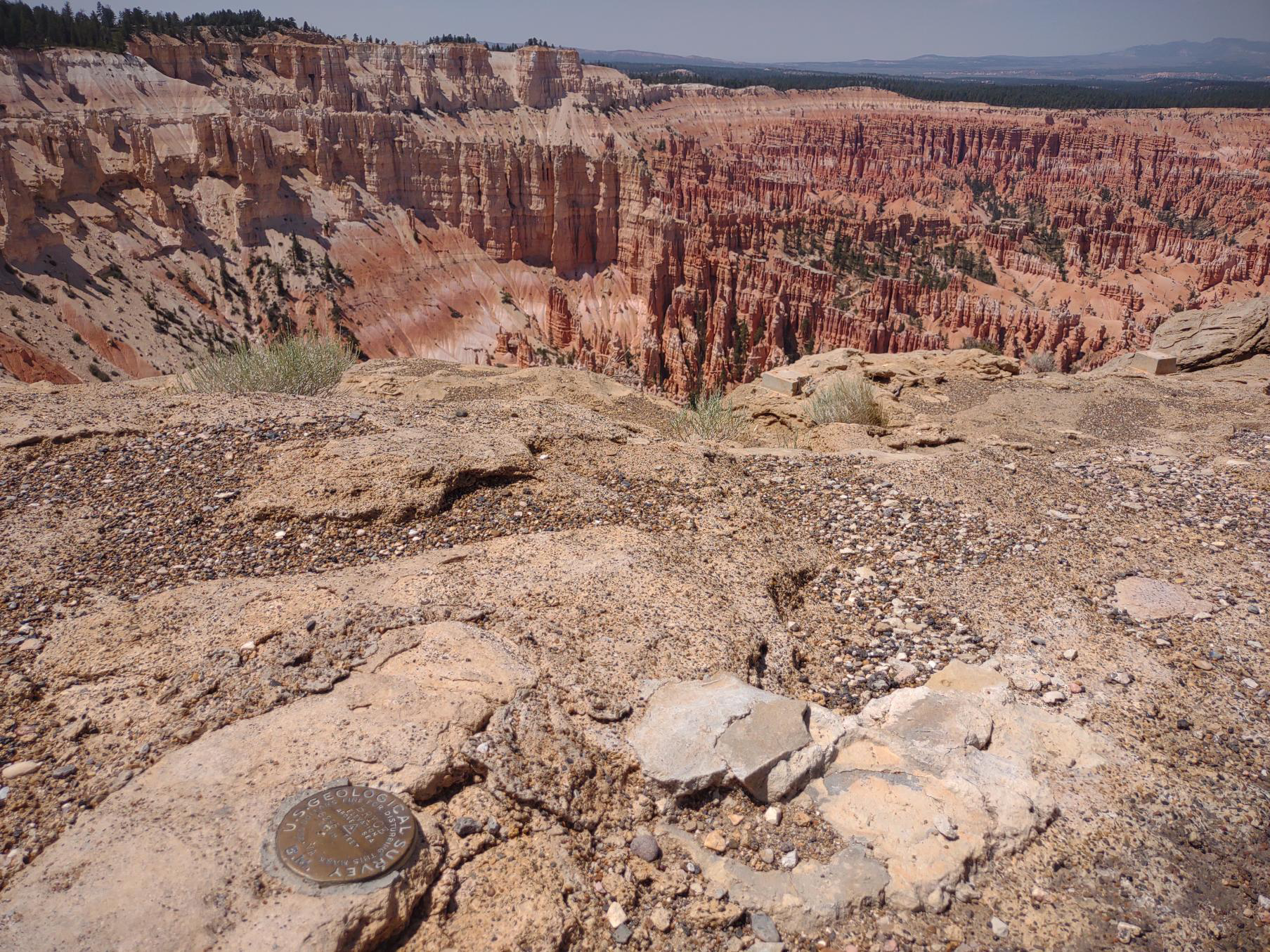
Berntsen survey marker at Bryce Canyon
The Evolution of "The Stake"
Today, the tools have changed, but the mandate hasn't.
We have traded the heavy iron chains for Total Stations and RTK GPS. We have swapped handwritten field notes for cloud-connected Digital Twins. But the physical monument, i.e. the marker in the ground, remains the critical link between the digital design and the physical reality.
In the 1700s, a "marker" might have been a notched oak tree or a pile of stones. These were temporary. As they rotted or scattered, disputes arose, and stability eroded.
Today, we build for permanence. A Berntsen marker isn't just a piece of metal; it is a stability anchor. It is engineered to resist corrosion, displacement, and time itself. When you drive a Berntsen monument into the earth, you are making a statement that the data tied to that point is reliable for generations.
Why "Cheap" Markers are an Expensive Risk
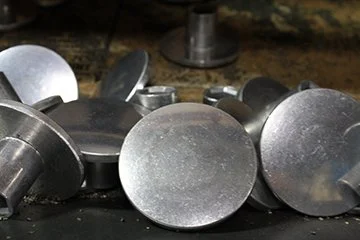
Berntsen cold-forged aluminum markers.
For the C-Suite, the choice of materials is often a line-item decision. But in surveying, the cost of failure is astronomical.
If a survey monument fails—if it corrodes, moves, or is unrecognizable—the "Truth of the Land" is lost. Re-establishing that truth costs thousands of dollars in legal research and field crew mobilization.
Washington’s Lesson: Do it right the first time.
Berntsen’s Promise: We provide the physical certainty that allows you to sleep at night.
Building the Next Century
Civilization is still being built. Every new subdivision, every bridge, every fiber optic network relies on the same principle that Washington established: Precision matters.
We are proud to continue that legacy. From the first stake in the ground to the final ribbon cutting, we ensure that the boundaries you set today remain the boundaries of tomorrow.