
Thomas Jefferson, surveyor, born April 13, 1743
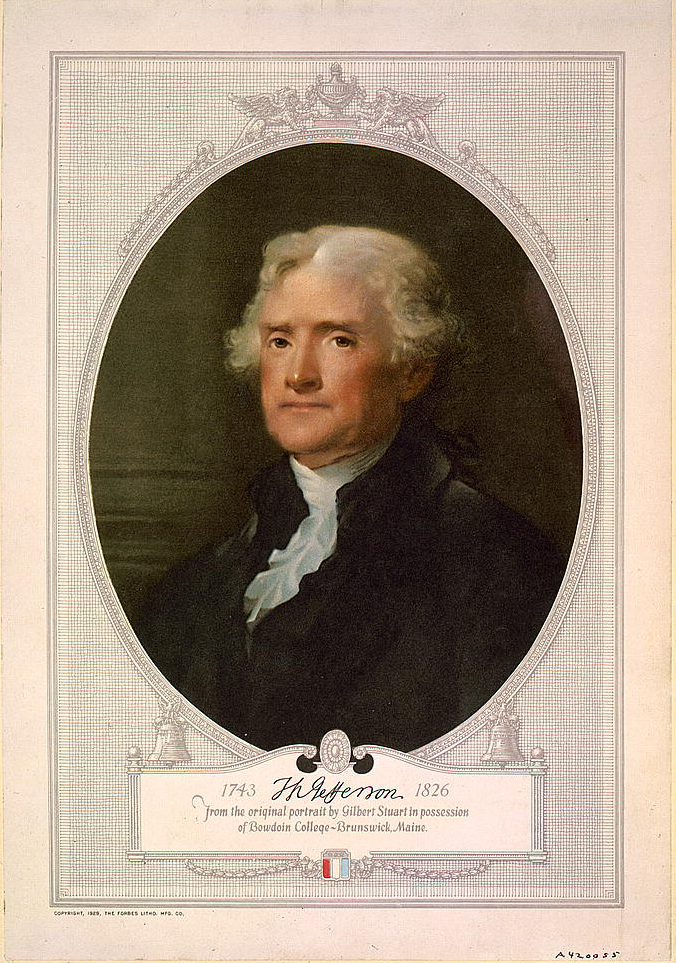
Stuart, G. (ca. 1929) Th. Jefferson -1826 / from the original portrait by Gilbert Stuart in possession of Bowdin College-Brunswick, Maine, ca. 1929. Retrieved from the Library of Congress.
Thomas Jefferson was an accomplished surveyor and mapmaker. He was born April 13, 1743 on his father's plantation of Shadwell located along the Rivanna River near the Blue Ridge Mountains of colonial Virginia.
At that time, the British were transitioning from commercial, maritime expansion toward territorial and military expansion in competition with France. The American colonies were a key part of this strategy, and the British military was well-established in North America. A critical part of this push was exploring the colonial coastline and creating accurate maps to better defend its territory. Additionally, investors (both colony-based and British-based) needed accurate maps of the interior for land speculation, a powerful method of wealth generation in the 1700s.
Peter Jefferson
Jefferson’s father, Peter Jefferson, used his surveying expertise to map his own holdings and surveyed the land now comprising Maryland and Virginia. He later led an expedition to draw the Fairfax Line marking the boundary of Lord Fairfax’s 5 million acres of land in Northern Virginia.
Despite his success, Peter Jefferson felt his lack of formal schooling acutely. He made sure Thomas received a classical education. Thomas attended boarding schools from age five before studying at the College of William and Mary. Later, he studied law under George Wythe and became a polymath proficient in languages (English, French, Latin, Greek, Italian, and Spanish), science (paleontology, botany, agriculture, and meteorology), and philosophy (evidenced by the Declaration of Independence). Jefferson later founded the University of Virginia and championed public education. Though his father passed away when Jefferson was 14, Thomas inherited his father's love for surveying, land management, and cartography, having spent many hours surveying with his father as a young child.
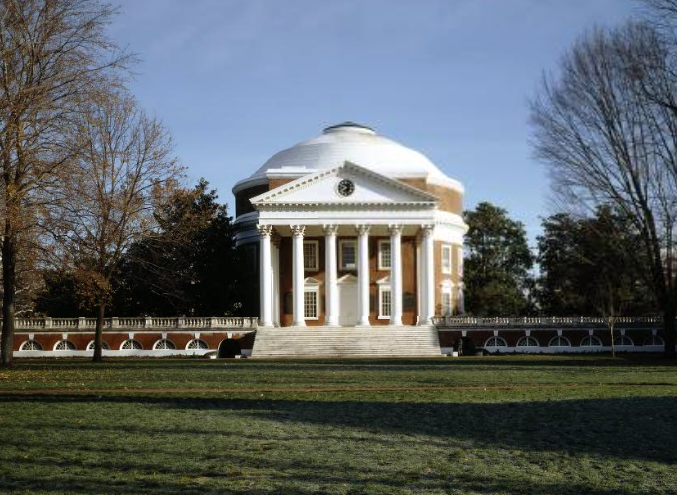
Modeled after the Pantheon in Rome, this was designed by Jefferson as the centerpiece of the University of Virginia. Highsmith, C. M., photographer. United States Virginia Charlottesville, Retrieved from the Library of Congress.
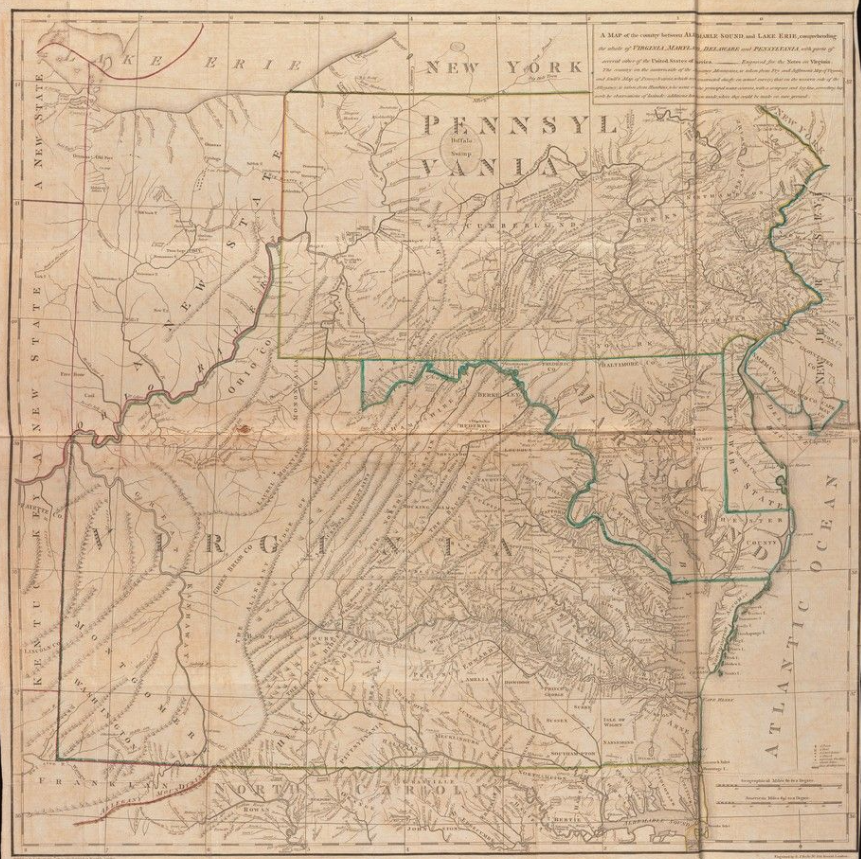
A map of the country between Albemarle Sound, and Lake Erie comprehending the whole of Virginia, Maryland, Delaware and Pennsylvania, with parts of several other of the United States of America. Created by Thomas Jefferson.
Benefits of a classical education
Like nearly all of the founding fathers, Thomas Jefferson’s classical education provided a rigorous intellectual foundation centered on intense study of Greek and Latin literature, rhetoric, and history. It simulated his life-long love of learning and interest in science, philosophy and rhetoric that had a major impact on the new nation.
Effective Political Communication: Mastery of classical rhetoric and literature enabled him to write persuasive foundational documents and letters with profound depth.
Analytical Reasoning & Logic: By studying Roman historians (Tacitus, Livy) and Greek historians (Herodotus, Thucydides), he developed strong critical skills to analyze power and government structure.
Philosophical Foundation for Liberty: Reading classical authors influenced his thinking about freedom, virtue, and the rights of citizens.
A "Natural Aristocracy" Ideology: His education fueled his belief in meritocracy—selecting the brightest minds for leadership regardless of wealth, which he later aimed to foster through education systems.
Jefferson’s education, emphasizing the liberal arts, was instrumental in shaping his view that an educated citizenry was essential to a functioning democracy.
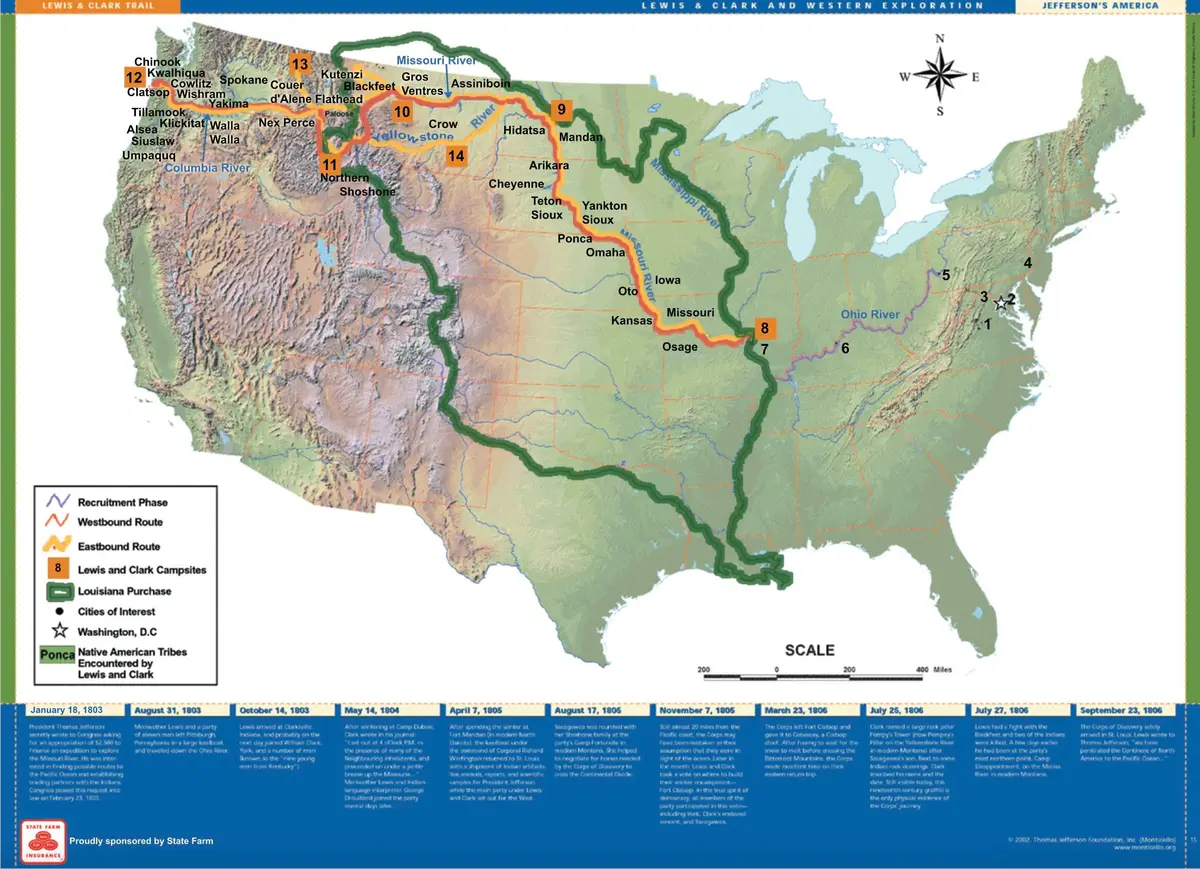
Map of the United States showing route of the Lewis and Clark Expedition and the boundaries of the original Louisiana Purchase.
Surveying
In June 1773, Thomas Jefferson followed in his father’s footsteps when he received a commission as surveyor of Albemarle County. Unlike his father, however, he completed his duties using deputies. He resigned the post the following year when he served in the Virginia House of Burgesses while also focusing on studying law. He used surveying primarily as a tool for imposing order on his farms. Dozens of plats survive today from projects he undertook to rationalize and describe his lands in Bedford and Albemarle counties. Surveying for a Virginia planter was essential, and he believed subsequent generations of his family ought to continue to practice. At the age of 66, he ran chains through the woods on the slopes of Monticello in an attempt to teach some of his grandsons the rudiments of surveying.[1]
Although he didn’t survey professionally, Jefferson’s surveying knowledge played a foundational role in the development of the Rectangular Survey System (Public Land Survey System - PLSS) and initiating the Lewis and Clark expedition to survey the Louisiana Purchase.
Key Aspects of Jefferson's Surveying Career:
Albemarle County Surveyor: Appointed in 1773, he followed in the footsteps of his father, Peter Jefferson, who was a noted surveyor.
Public Land Survey System (PLSS): Jefferson was instrumental in creating the PLSS, which divided western lands into grids, rather than the irregular "metes and bounds" system used in the East.
Land Management: As a politician, he managed land claims and oversaw the organization of land in the Northwest Territory.
Expansion Mapping: He promoted westward expansion by commissioning the Lewis and Clark expedition to map the Louisiana Purchase.
His background as a surveyor was a crucial element of his broader work in, westward expansion, science, and the development of American territory.
Today, we celebrate the birth of this pivotal American whose broad interested and deep knowledge shaped a new nation.
Footnotes and Further Exploration:
[1] https://www.monticello.org/encyclopedia/surveying
Read an article about Jefferson and Maps on Old World Auctions for a detailed look at his interest in cartography.