
The Unmovable Boundary:
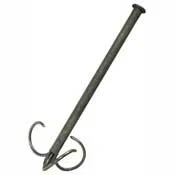
Berntsen’s FENO Survey Monument

Why Soil Instability is a Legal Risk (And How to Anchor It)
Standard rebar pulls out. Feno locks in. Why your choice of marker dictates the security of your survey.
Executive Summary for Developers & Principals:
The Reality: Loose, sandy, or loamy soils—common in coastal and rural developments—offer poor retention for standard survey stakes.
The Risk: A marker that shifts or is easily pulled out ("disturbed monument") creates legal ambiguity and requires expensive crew remobilization to re-set.
The Solution: Feno markers utilize a "biomimetic" design (expanding roots) to achieve up to 3x the pull-out resistance of standard rebar.
When the Ground Gives Way
In land development, the "Property Line" is a theoretical concept with a very physical requirement. It demands that a specific point on the earth remains fixed, regardless of the environment.
But in many regions—particularly coastal areas, wetlands, or new fill sites—the ground itself fights against this permanence.
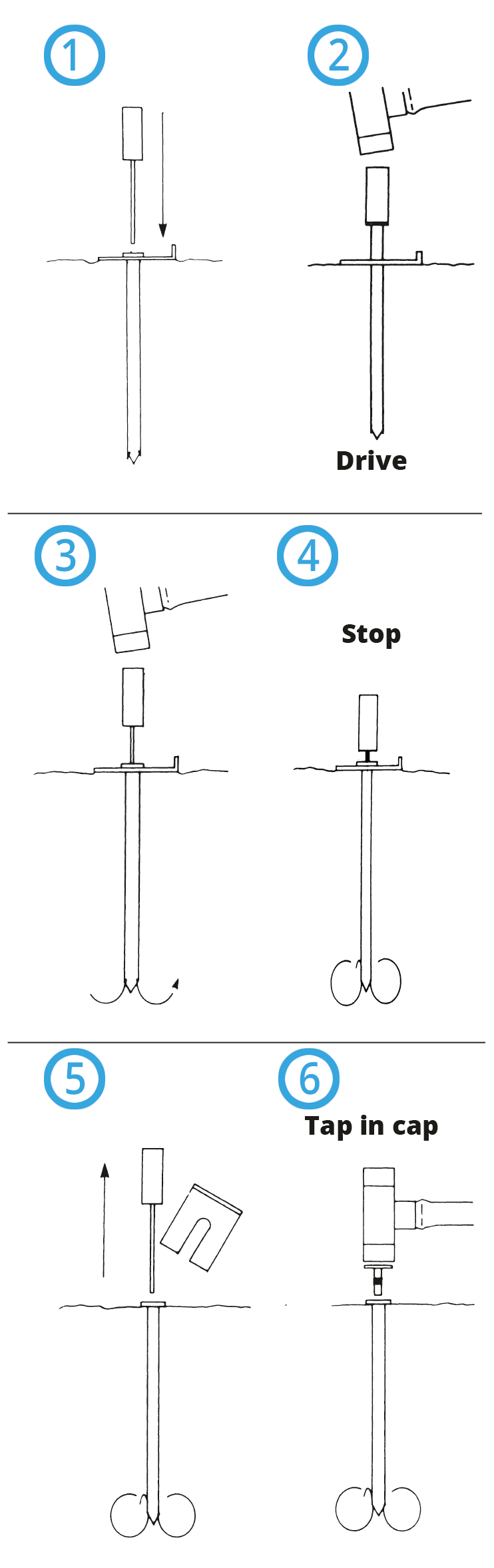
FENO installation illustrations.
Soil Erosion: Rain and wind strip away the topsoil holding a marker.
Frost Heave: The freeze-thaw cycle pushes smooth objects (like standard pipes or rebar) upward and out of the ground.
Accidental Removal: In loose soil, a standard stake offers so little resistance that a construction vehicle (or a curious vandal) can pull it out with zero effort.
For the Project Executive, a missing marker is not just a nuisance; it is a Project Stop. You cannot pour concrete or build fences until the surveyor returns to re-establish the point. That is downtime you cannot afford.
The "Tree Root" Principle: Feno Technology
Why do trees survive hurricanes while fence posts fall over? Roots.
The Feno marker was designed based on this principle of "Geotechnical Anchoring." It solves the loose soil problem by expanding after it is in the ground.
How it Works (The Feno Mechanism):
Drive: The hollow spike is driven into the ground like a standard stake.
Deploy: A set of galvanized steel prongs is driven through the center of the shaft.
Anchor: These prongs curve outward and upward into the compacted soil, creating a "root system" that locks the marker in place.
The Economics of "Pull-Out Resistance"
Why pay a premium for an anchored marker? Because "Cheap" is expensive.
Let’s look at the economics of a Disturbed Monument:
Cost of a Feno Marker: ~$15–$20.
Cost of a Re-Survey: ~$1,500–$2,500 (Crew mobilization + time).
If you use a smooth iron rod in loose soil, you are saving $15 to gamble $2,500.
The Feno marker provides high-tensile locking power. It resists frost heave because the roots are anchored below the frost line. It resists vandalism because it cannot be pulled straight up—it must be dug out.
Securing the Asset
Your land is likely the most valuable asset on your balance sheet. The markers that define it should be as permanent as the deed itself.
Don't let loose soil loosen your legal claims. Use a marker that grabs the earth and refuses to let go.