
Summer Solstice – key to ancient surveying
Summer solstice has been an important day since people inhabited the earth. On Sunday, June 21st, many cultures will be celebrating summer solstice with rituals and festivals. In ancient times, summer solstice was more than a day for celebration – it was key to understanding the world. These celebrations, known on the European continent as Midsommer, were rooted in agricultural and pagan societies. The solstices were thought to be a magical time where powerful forces were unleashed. Ancient (and modern) cultures believed it was important to mark the day with rituals.
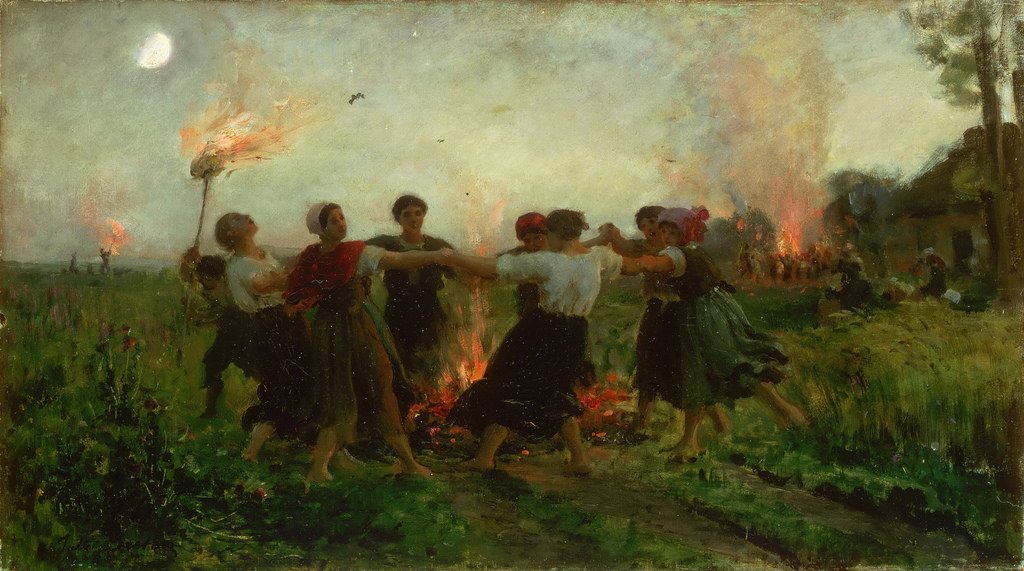
La Fête de la Saint-Jean, painted in 1875 by the French naturalist artist Jules Breton depicting a ring of barefoot women, arms linked, dancing in a circle around a vibrant bonfire in an open field. In the foreground, other figures hold up flaming torches to the sky, a reference to traditional bonfire competitions and ancient light rituals. This tradition predated Christianity and was celebrated on summer solstice across Europe.
The Roots of Midsommer
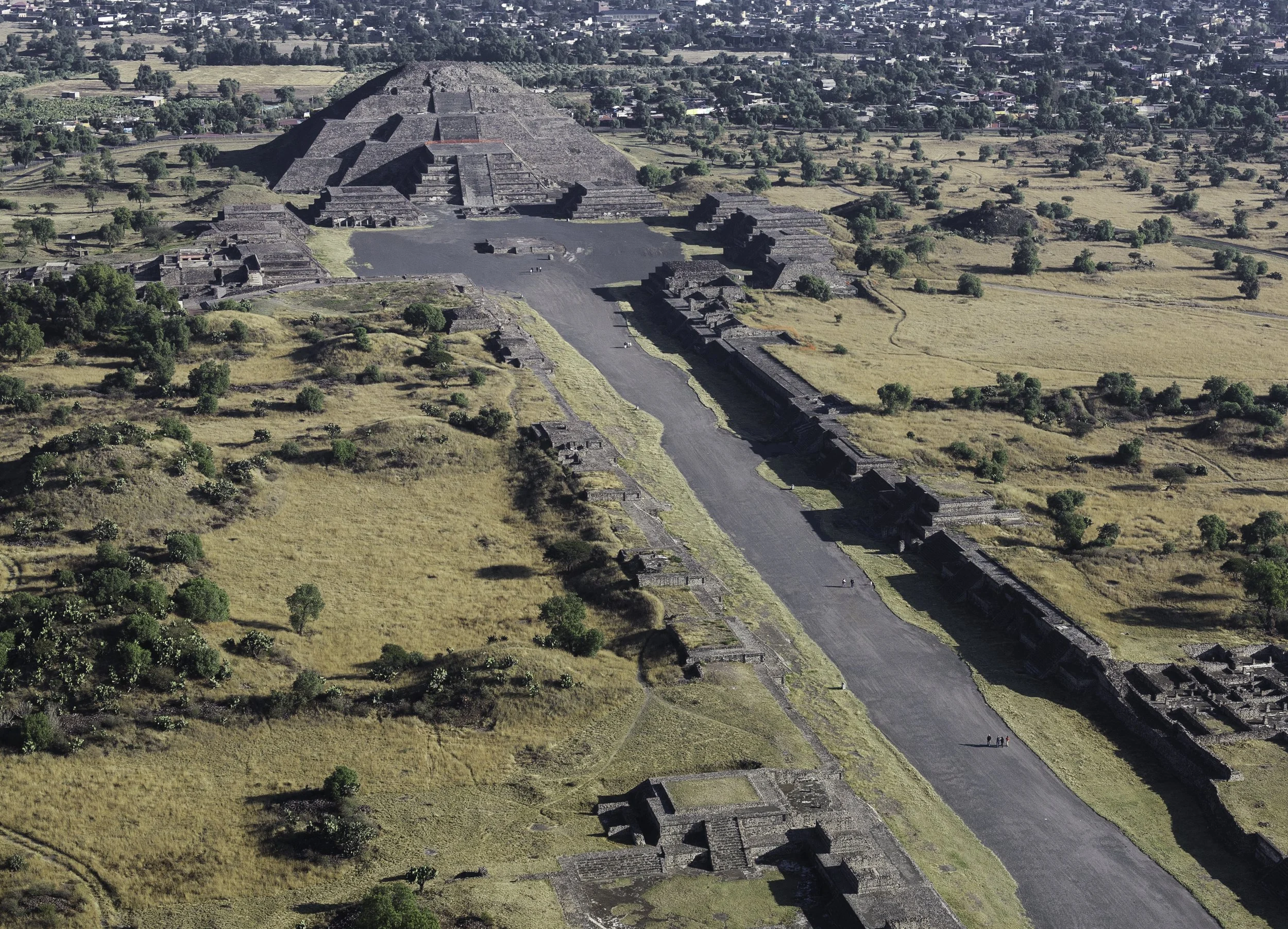
The pyramid of the moon located in Teotihuacán, Mexico. Photo by Ricardo David Sánchez. This city was surveyed to be in alignment with the sun on the summer solstice.
Pagan Beginnings: Long before the introduction of Christianity, Northern and Central European communities celebrated the sun's life-giving power. Festivals focused on agricultural cycles, welcoming warm weather, and praying for a successful harvest.[1]
Magical Folklore: The brief nights around the summer solstice were considered a time of magic and mystery. Pagans believed plants gained healing powers and rituals could predict the future or bring good fortune in love.[2]
The Maypole: Dancing around a tall, leafy pole is a practice with deep roots in agrarian and Germanic traditions. It originally served as a symbol of fertility and the renewal of life.
Bonfires: To ward off evil spirits and protect the changing seasons, communities lit large bonfires, a tradition that spread across Europe from as early as the 6th century AD.[3]
It was always more than a party
Today, many countries still celebrate summer solstice. But to the ancient surveyors and engineers, the summer solstice was used to create massive solar calendars, align monumental architecture, and calculate the Earth's circumference. The word solstice comes from the Latin solstitium. Sol means “sun” and sistere means "to stand still" or "come to a stop". Because the sun seems to stand still twice a year, the solstice was a perfectly repeatable, fixed baseline for surveying, city planning, and managing agricultural cycles.
For example:
Surveying and Town Planning: The precise points of summer solstice sunrises and sunsets allowed ancient surveyors to lay out an accurate grid. This ensured urban areas and roads were perfectly aligned with cardinal directions, establishing order and logic in settlements and cities while aligning them with the cosmos.
Specific historical examples demonstrate how different civilizations integrated solstice alignments into their urban design:
Ancient Egypt (Giza): Surveyors used gnomons (vertical sticks or pillars) to track shadows and align the Great Pyramids. On the summer solstice, when viewed from the Sphinx, the setting sun sinks precisely between the pyramids of Khufu and Khafre, grounding the city's religious center in celestial geometry.[4]
Mesoamerica (Teotihuacan): The city's massive grid was designed around the summer solstice. The layout is slightly tilted to face the setting sun on the day of the solstice, allowing [5] the city’s civic spaces and ceremonial avenues to interact directly with the sun's path.
Ancient Rome (Verona): Roman agrimensores (land surveyors) carefully mapped towns and military camps. In northern Italy, the city of Verona was oriented on an axis that perfectly aligns with the summer solstice sunrise, demonstrating how early grid-based civic planning integrated astronomical sightlines.
The Americas (Chaco Canyon): Ancestral Puebloans carved rock designs to track solar cycles, embedding solstice knowledge into their community architecture. The alignment of towns and ritual structures to the solstice dagger of light helped regulate the community's agricultural and ceremonial lives.
Megalithic Europe: The astronomical precision required to plan these early sites set the stage for later urban design. Surveyors used wooden sighting poles to mark solstice positions, building monuments that established the baseline for how communities arranged their surrounding territories.
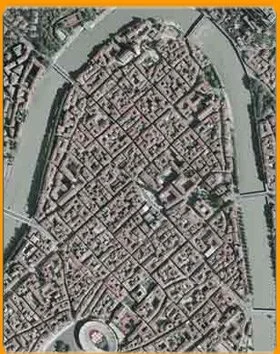
An aerial picture of Verona: A clearly visible foundation system of the Roman city built in the 2nd century A.D. It was built inside a bend of the Adige river that acted like a moat around a castle. The original reticulum (grid) is still visible: the defensive walls, the Via Postumia, the forum and the amphitheater (Arena).
Monumental Alignment: Prehistoric engineers aligned structures with the longest day of the year. At Stonehenge in England, stones were arranged so that the rising summer sun perfectly aligns with the central axis and the "Heel Stone," allowing ancients to track the solar year. [1]
Geodesy and Geography: In ~250 BCE, the Greek polymath Eratosthenes used the summer solstice to calculate the circumference of the Earth. He engineered a measurement using a deep well in Syene (modern Aswan), where the sun casts no shadow at high noon on the solstice. By comparing this to the shadow cast by an obelisk in Alexandria, he successfully calculated the Earth's size.
Calendars and Timekeeping: Ancient builders utilized the extreme angles of solstice sunlight for early astronomical engineering. By engineering openings in temples, pyramids, and walls, they tracked time. At the Karnak Temple in Egypt, the main axis aligns with the summer solstice sunrise, bathing specific inner sanctuaries in light.
Tracking the solstice also gave ancient civilizations the vital ability to predict the seasons. Knowing exactly when summer began helped agricultural societies anticipate seasonal rains and the flooding of major rivers, which were essential to crop yields and survival.
Recent Solstice History
The solstices have been used primarily for calibrating instruments and orienting major geographic boundaries. Surveyors relied on the precise observation of the Sun's lowest or highest points to orient their equipment and map properties.
Specific uses include:
Surveyor Calibration: The precise solar positions at the summer and winter solstices historically provided surveyors with fixed geometric references. These were used to calibrate astrolabes and early transit instruments in the field.[6]
Boundary Alignments: During the 1760s, surveyors and astronomers Charles Mason and Jeremiah Dixon used celestial tracking, including the Sun's solstice paths and stellar transits, to orient the famous Mason-Dixon Line separating Maryland, Pennsylvania, Delaware, and West Virginia.
Historical Monuments: Many Indigenous and historic colonial monuments constructed within this timeframe were engineered by laying out exact sightlines to solstice sunrises and sunsets.
Sunday is the longest day of the year in the Northern Hemisphere, a great day to remember that no matter how sophisticated our technology, we’re still governed by the same celestial rhythms that our ancestors understood and celebrated. Happy Midsommer!
Footnotes:
[1] https://www.pagankids.org/post/midsummer
[2] https://www.britannica.com/topic/Midsummer-holiday
[3] https://www.nationaltrust.org.uk/discover/history/history-of-summer-solstice-traditions
[4] https://www.skyatnightmagazine.com/space-science/solstice-stones-tombs-temples
[5] https://www.almanac.com/content/ancient-sites-aligned-solstice-and-equinox