
National Trails Day
June 6 is National Trails Day®. The United States has more than 200,000 miles of trails, stretching across national parks and forests, state reserves and municipal lands. The trails are managed by federal, state, and local agencies, as well as thousands of private organizations. To date, we lack a national registry that lists them all. But that doesn’t stop 63 million Americans from hitting the trails each year.
Surveyors have been hiking through the wilderness since before the country was founded, often using trails blazed by Native Americans or forging new trails as they surveyed land. Hiking for the enjoyment of the great outdoors has been a national pastime since the early 1800s.
The first official trail
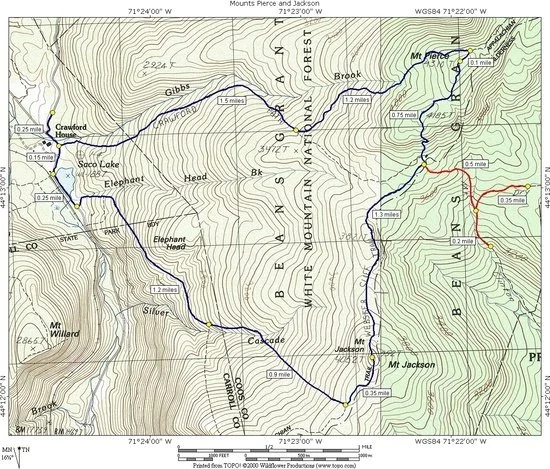
The start of the Crawford Path ascends Mount Pierce before following the southern Presidential ridge to the summit of Mt. Washington
The first official hiking trail was created in 1819, when local innkeepers-turned-mountain guides Abel Crawford and his son Ethan Allen cut the first trail to draw visitors who wanted to hike to the summit of Mount Washington in New Hampshire. Conveniently, they had built an inn for those who didn’t relish camping.
The news about this scenic trail and hotel quickly spread. Year by year, more visitors were drawn to the area, encouraging the Crawfords to improve the trail and create other routes to the summit.
By 1840, the first path was converted to a bridle path, and by 1851, railroads brought even more hikers to the area, including scientists, poets and artists.
Charles T. Jackson, the state geologist at the time, was guided to the summit by Abel Crawford. This trip was integral to his 1844 “Final report on the geology and mineralogy of the state of New Hampshire; with contributions towards the improvement of agriculture and metallurgy.” This report was an important historical milestone in the scientific exploration of the state.
Henry David Thoreau found his way to the mountain in 1858, camping near the mountain and relying on a guide lead him on the Crawford Path.
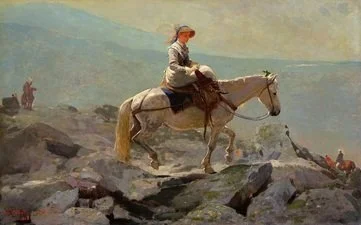
This1868 oil painting titled The Bridle Path, White Mountains” shows a rider enjoying the Crawford Path. Winslow Homer. Oil on canvas. Permanently housed at the Clark Art Institute in Williamstown, Massachusetts.
Trails as hotel amenities
By the late 1800s, land protection and recreational hiking had become rooted in American politics and society. In the Northeast, hotel companies built footpaths as part of their facilities. In the West, similar hotel trails were designed to guide stock and pack trains into remote country. In California’s Yosemite Valley, a network of tourist trails began in the 1850s. This trail system expanded as the area became a state park in 1864 and then later a national park in 1890.
Early hotel operators built extensive trail systems on their properties. A private entrepreneur hired F. E. Matthes, a topographer with the U.S. Geological Survey to survey Grand Canyon’s Bright Angel Trail in 1890 as a toll trail; once the railroad brought visitors in 1901, it became the most popular trail for hikers, as it remains to this day. In Montana, the Glacier Park Hotel Company constructed a horse trail network in the 1910s. This network linked tourist chalets and tent camps. The 163-mile trail system consisted of three loops, and it earned Glacier the title of America’s “Trail Park.”[1]
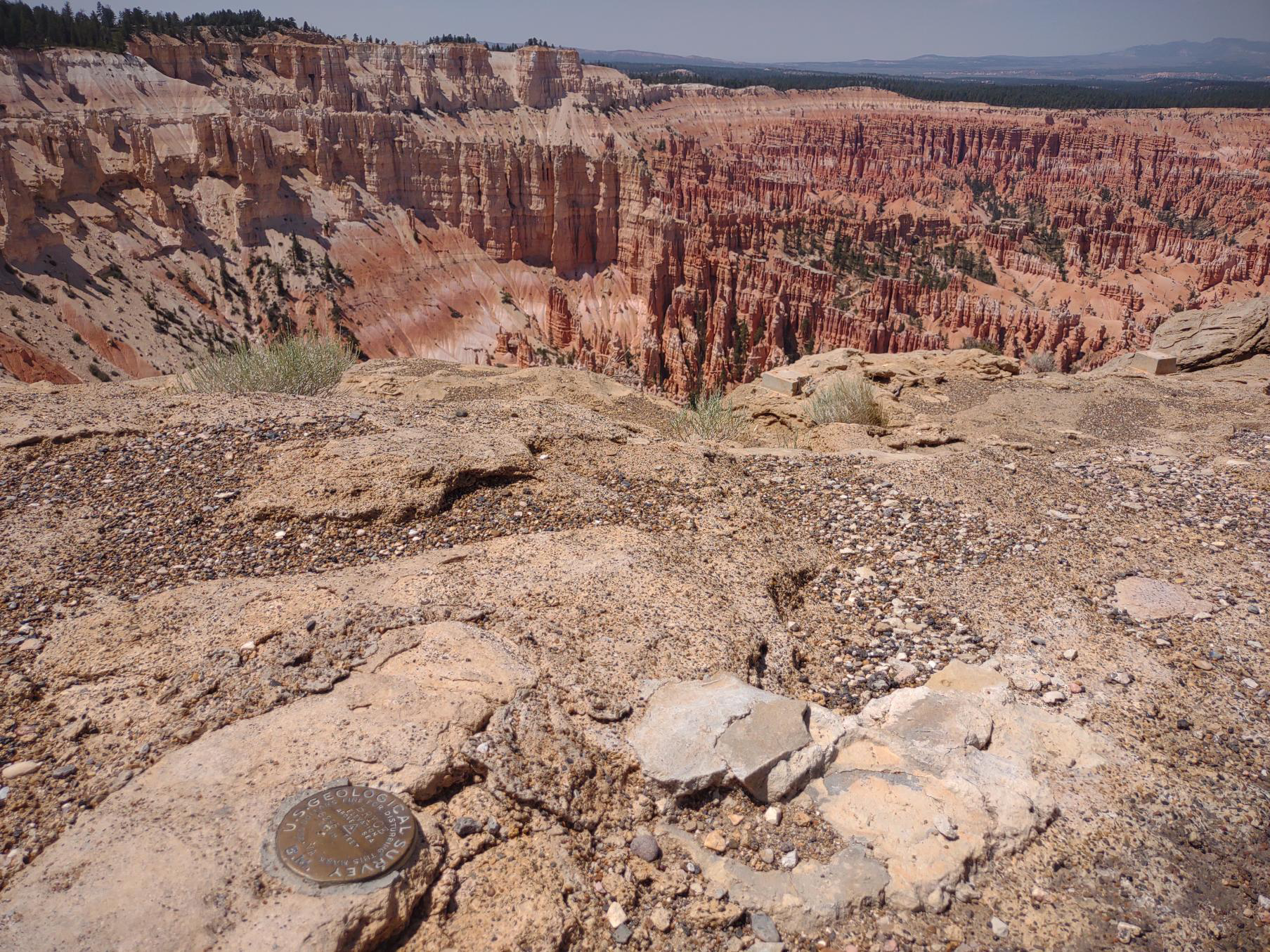
A bronze survey marker near a trail in Bryce Canyon.
Today, we continue to expand the number of trails and improve facilities throughout the country. In 2025, the EXPLORE Act (Public Law 118-234) was enacted to expand outdoor recreation on public lands and waters. This law extends the American quality of life by improving infrastructure, expand accessibility while protecting natural resources for current and future generations.[2]
Berntsen marks the trail
Hikers throughout the country appreciate well-marked and well-maintained trails. Since 1972, Berntsen has supplied high-quality trail markers that are essential for a safe and well-maintained path. Sturdy, customizable Carsonite posts and campsite markers are engineered to resist vandalism, harsh environments and time. Berntsen’s rugged trail mile marker signs serve as reference points for distance traveled and remaining distance, helping hiking, biking, and walking trail users plan their routes and manage their time. For permanent marking, Berntsen’s Metal Trail & Path Markers are designed to last decades. Forged from one piece of bronze alloy, they feature a flared stem for secure anchoring in concrete.
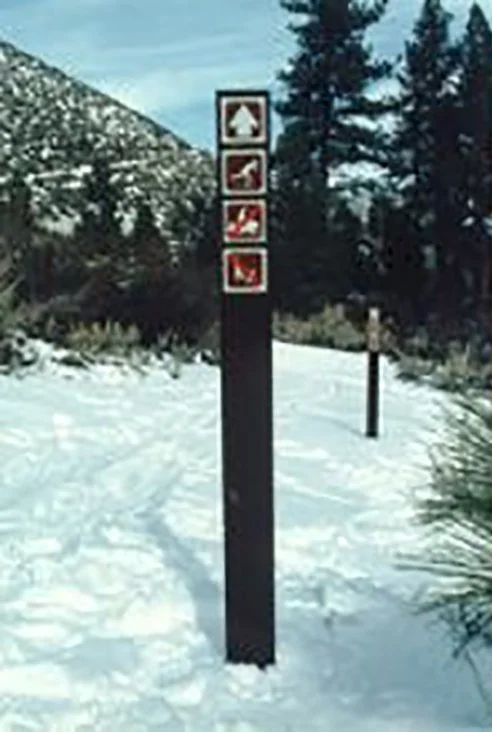
Berntsen Carsonite Ski Trail Markers
From campsite posts to metal trail markers, Berntsen delivers lasting products that guide hikers through even the most challenging trails.
National Trails Day
Hiking is so important to so many people that they support this hobby by volunteering to build new trails and help maintain existing trails. It’s hard work, but very fulfilling. The National Hiking Society has designated June 6 as a day to celebrate hiking. All types of events and activities are available throughout the country – see their website for events in your area.
Trail links:
National Scenic Trails from the National Park Service
Best state parks in the United States from All Trails
List of hiking trails in the US from Wikipedia
Footnotes:
[1] https://www.nps.gov/subjects/trails/creation-of-trails.htm
[2] https://www.blm.gov/about/laws-and-regulations/explore-act