
AI, Data Centers and the Future

Spirals, M.C. Escher. Artist, Dutch, 1898 - 1972
One of the models used to train AI is called a recursive loop. It refers to a feedback loop where an AI model generates new data which is then used to further train and improve that same model. That same concept can help visualize the complex interaction of forces driving the development and adoption of AI itself. Basically, AI is creating demand for data centers, while at the same time, AI is being used to streamline and improve the processes and technology used to build data centers.
AI is not just modifying how data centers are built, AI is transforming US infrastructure by optimizing design, construction, and maintenance through predictive analytics, automation (drones, robotics), and data analysis, leading to efficiency gains and predictive maintenance for things like roads, grids, and water systems.
To support the growth of AI, massive data centers are under construction across the country, a trend that will continue for the foreseeable future. The AI market in construction is projected to grow from USD 4.86 billion in 2025 to USD 22.68 billion by 2032 with a compound annual growth rate (CAGR) of 24.6%.
AI is driving technology convergence

Illustration on how InfraMarker RFID with GIS helps locate and verify underground utilities in data centers.
AI is driving the convergence of many types of technologies – for example, RFID and GIS are key to tracking buried infrastructure during construction. Later, it’s used to manage the myriads of assets that make up a data center and assisting the maintenance of the systems that keep data centers running.
Data centers are continually being built or expanded. The US data center market is experiencing significant growth, with nearly 3,000 new data centers under construction or planned across the country in the next 2 years. This includes over 570 upcoming colocation and hyperscale self-built data center projects, expected to add over 100 GW of capacity. [1]
Construction companies build data centers using Building Information Modeling (BIM) and Geographic Information Systems (GIS) to create highly accurate digital models of facilities and their critical infrastructure. Having precise knowledge of the location of buried assets is essential before excavation begins to ensure safety and prevent costly mistakes.
A digital map can show where underground utilities lie based on survey-grade GPS coordinates. Unfortunately, reality can differ from digital representations due to environmental conditions, miscommunication, or other factors. Few types of construction feature the density of underground infrastructure required by data centers that include: chilled water piping, electrical and telecom duct banks and conduits, and underground fuel systems.
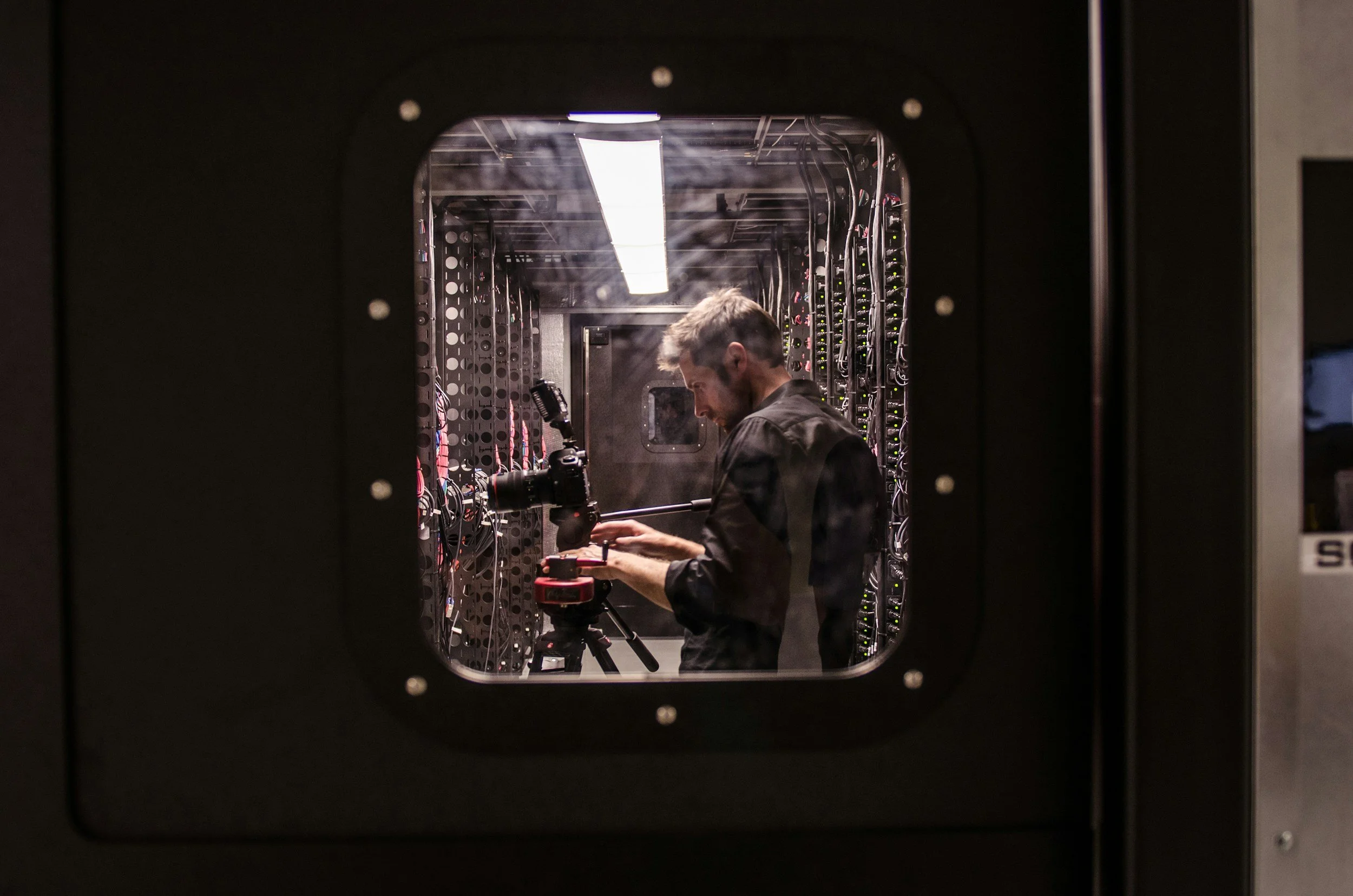
Any excavation that occurs at a data center must be extremely accurate to avoid striking underground utilities. A utility strike on any of these systems would be disastrous – with losses in the tens of millions of dollars and significant disruptions of service. That’s why data centers use RFID to mark the location of buried infrastructure so that it can be identified and verified before excavation begins.
Critical maintenance
In data centers, RFID is used to track asset location and to capture details such as installation date, maintenance and repair records and other critical information.
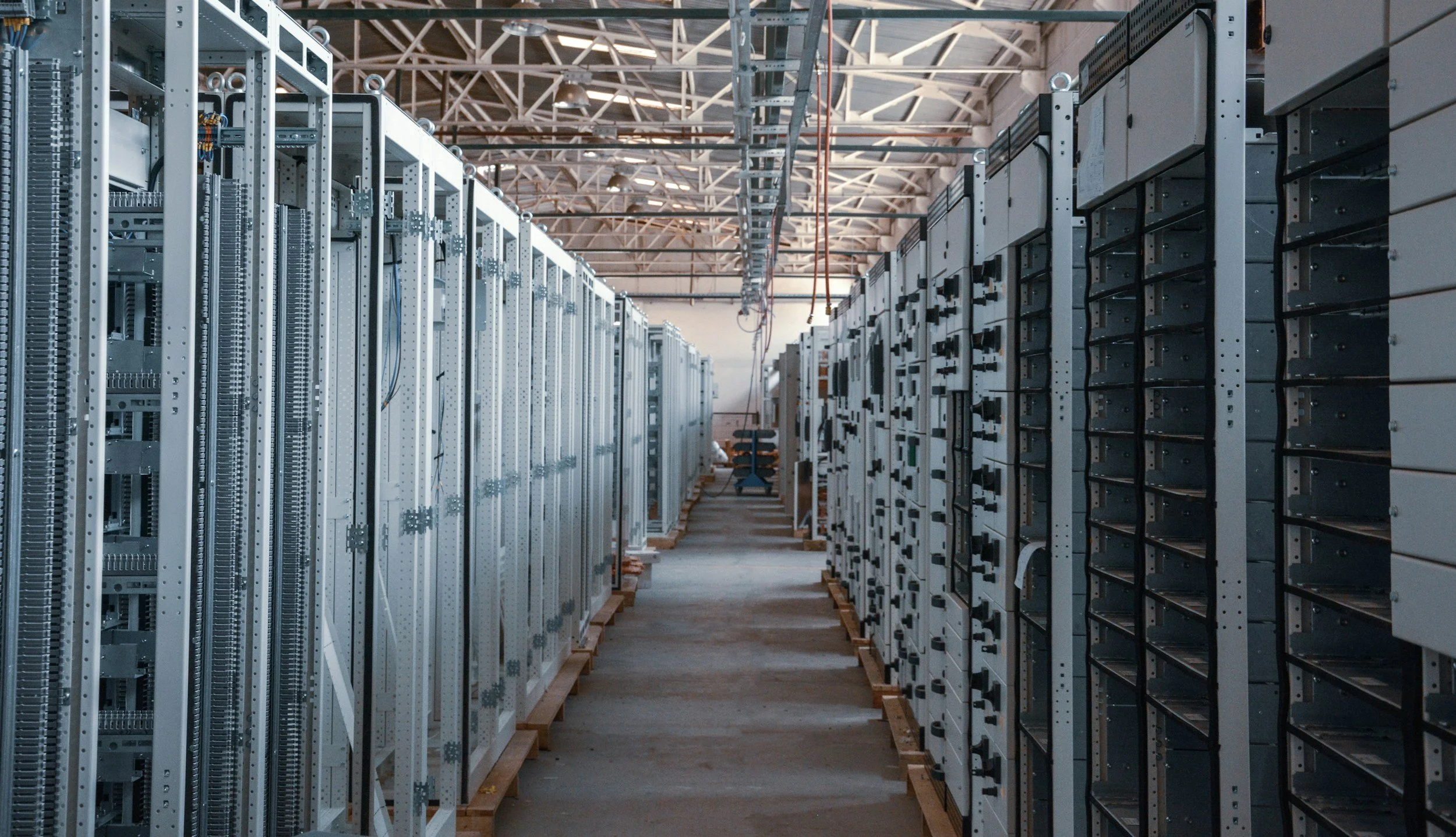
Typical data center under construction
“One of the primary advantages of RFID technology for data center asset tracking is its ability to give improved visibility and real-time tracking capabilities. RFID tags attached to assets generate radio signals, which are detected by RFID readers strategically located throughout the data center. It enables data center operators to track the position and movement of assets in real time, minimizing the need for human searches and mitigating the risk of asset loss or misplacement. RFID enables data center administrators to swiftly detect assets, trace their movement around the facility, and guarantee maximum resource utilization.” [2]
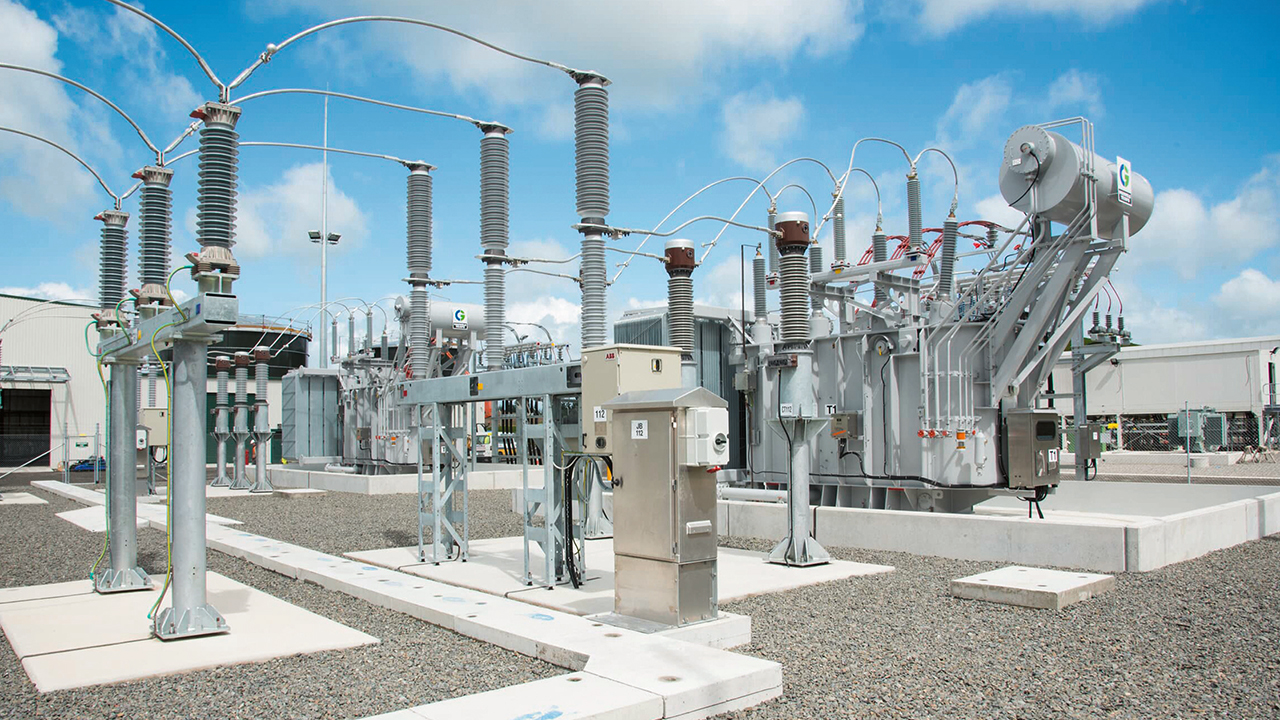
Purpose-built substations for the data center industry
RFID tags feature unique identifiers encoded in the EPC memory that can be read automatically by RFID readers. It reduces errors and means that asset data is correctly documented in the data center's inventory management system. RFID technology improves data accuracy, allowing data center managers to make more informed decisions, maximize asset utilization, and reduce downtime. Reducing downtime is paramount in data centers where the cost of downtime is $9,000 per minute.
Data center construction
The construction of data centers requires enormous amounts of power (and water and minerals). In turn, these resource demands are driving a boom that is rippling throughout the economy, from mining key minerals to infrastructure improvement (power grids, water utilities and other infrastructure needed to build data centers) to server manufacture and installation.
Types of data centers
Data centers for generative AI, based on graphics processing units that churn through massive amounts of data, mostly from the internet. These centers can be owned by a single entity or host platforms for multiple businesses.
High-security data centers for military and intelligence gathering developed and run by governments. These centers feature incredibly fast processors protected by powerful firewalls.
Edge data centers are located close to the specific activities they support, such as autonomous vehicles or manufacturing centers using robotics.
Power for data centers
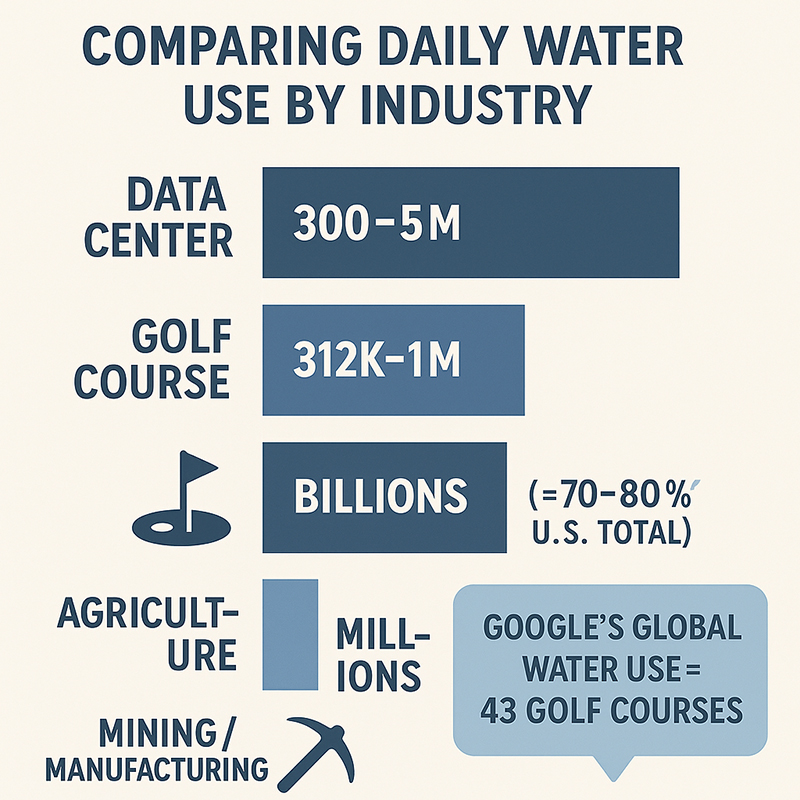
AKCP graphic of water use in data centers (in gallons) compared with other industries
In 2023, data centers used about 4.4% of US electrical power. The demand is expected to increase by up to 12% by 2028 according to the Lawrence Berkeley National Laboratory. This requirement is a huge issue, because it can take up to 10 years to build transmission lines to get power from where it’s generated to the data center. The government is working to upgrade 100,000 miles of transmission lines, but it’s not going to happen fast enough to meet demand.
Fortunately, AI itself is helping to reduce this demand. According to the Center on Global Energy Policy, AI can help with planning, permitting and operation of renewable power projects.
Second, AI can improve the transmission and distribution of electric power. AI can help with transmission expansion planning, determining the best location and capacity of new transmission lines. AI algorithms are essential for dynamic line rating — a method of determining the maximum capacity of transmission lines based on current weather and line conditions that can increase the capacity of transmission lines by at least 30%.
Third, AI plays an especially important role in virtual power plants (VPPs) — networks of decentralized, distributed energy resources including end-use devices. VPPs help integrate renewable power into electric grids, limiting the need for expensive plants that supply power during high demand periods and cutting greenhouse gas emissions.
Finally, AI can improve – and potentially revolutionize – energy storage. AI can help integrate energy storage into power grids, predicting when renewable power will be curtailed and supporting energy storage scheduling more broadly. [3]
Power generation
US electricity comes from natural gas (43%), coal (16%), wind, solar and thermal (21%) and nuclear energy (18%). Diversifying energy sources will be essential to meeting the growing demands of data centers, which cannot operate reliably without significant improvements in U.S. energy production.[4] Unfortunately, the recent appropriation bill passed by congress rolls back support for wind, solar and thermal energy, preventing the generation of an estimated 344 gigawatts of energy over the next decade. Nuclear power is expected to take up more of the demand – Three Mile Island is expected to re-open in 2028 to power Microsoft’s data centers.
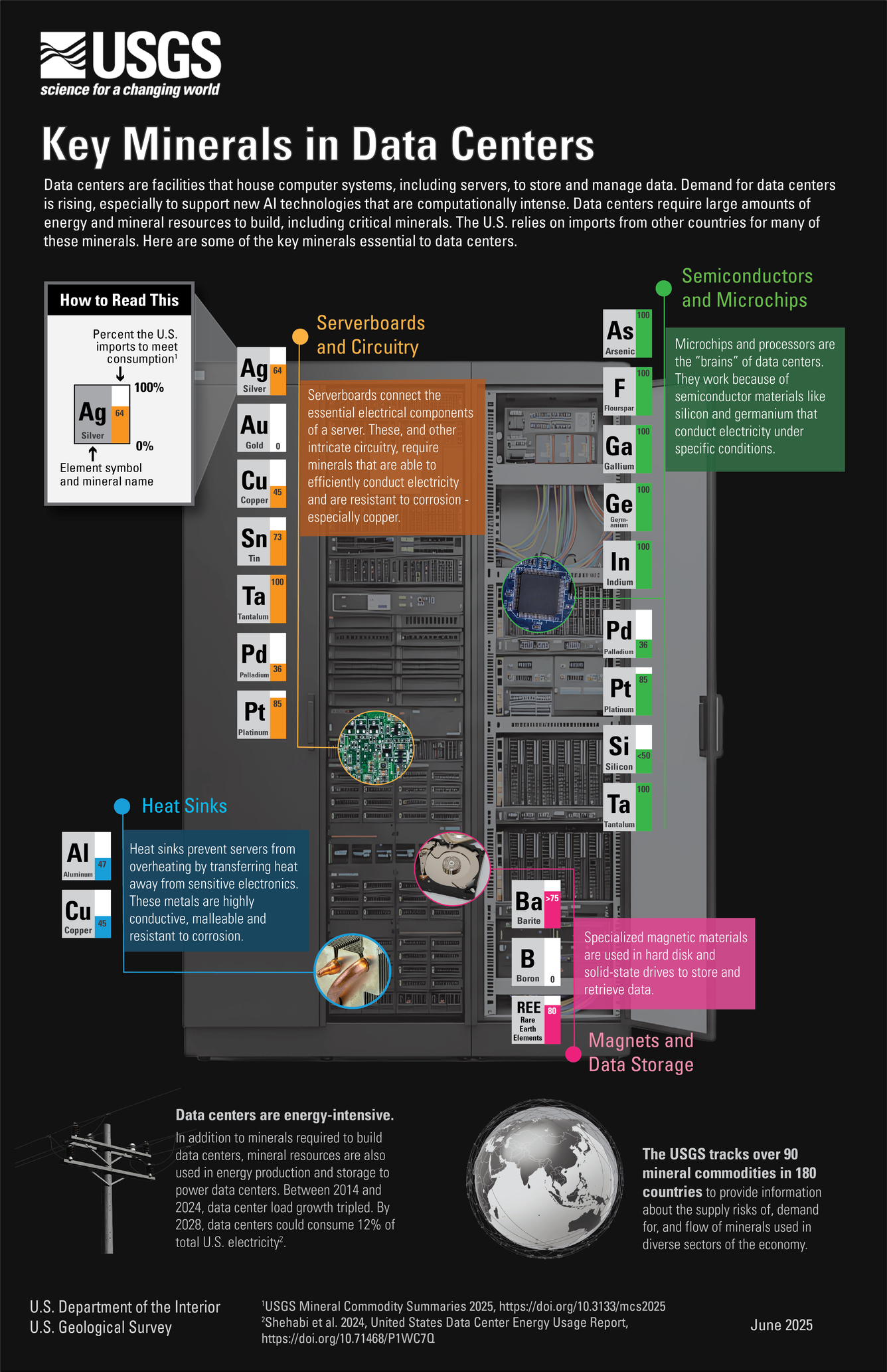
USGS graphic depicting mineral use in data centers
Water needs for data centers
Some data centers consume as much as 500,000 gallons of water per day, which is difficult to supply in most areas and nearly impossible in arid regions. Fortunately, advances in microfluidics[5] are expected to reduce the demand for water used in cooling microprocessors. But in the meantime, city officials across the country are grappling with determining whether the local water supply is adequate for both the community and proposed data centers.
Mining for data centers
Data centers need minerals like Copper, Aluminum, Rare Earth Elements (REEs) (neodymium, dysprosium for magnets), Gallium, Silicon, Tantalum, Lithium, Cobalt, and Nickel for wiring, cooling, chips, magnets, batteries, and infrastructure. These are mined globally, with China dominating REEs, Gallium, and refining; the DRC leading cobalt; Australia/Chile in lithium; while copper and aluminum come from various nations like the U.S., Chile, Peru, and China.
This graphic from the USGS shows the minerals required by data centers and what percentage of each must be imported. Recent tariffs have complicated the picture, affecting key minerals and materials, including copper, steel and aluminum and REEs.
Despite all of these issues, data center construction will continue and the impact of AI on our daily lives will increase.
Conclusion
AI is an exponential force: revolutionizing how we build and manage physical infrastructure while simultaneously requiring unprecedented, rapid build-out of new digital infrastructure, creating both opportunities and significant new challenges for the US. In just a few years, the business landscape has been transformed by applying AI. Soon, AI will impact every part of our lives, giving us a new technological reality to master.